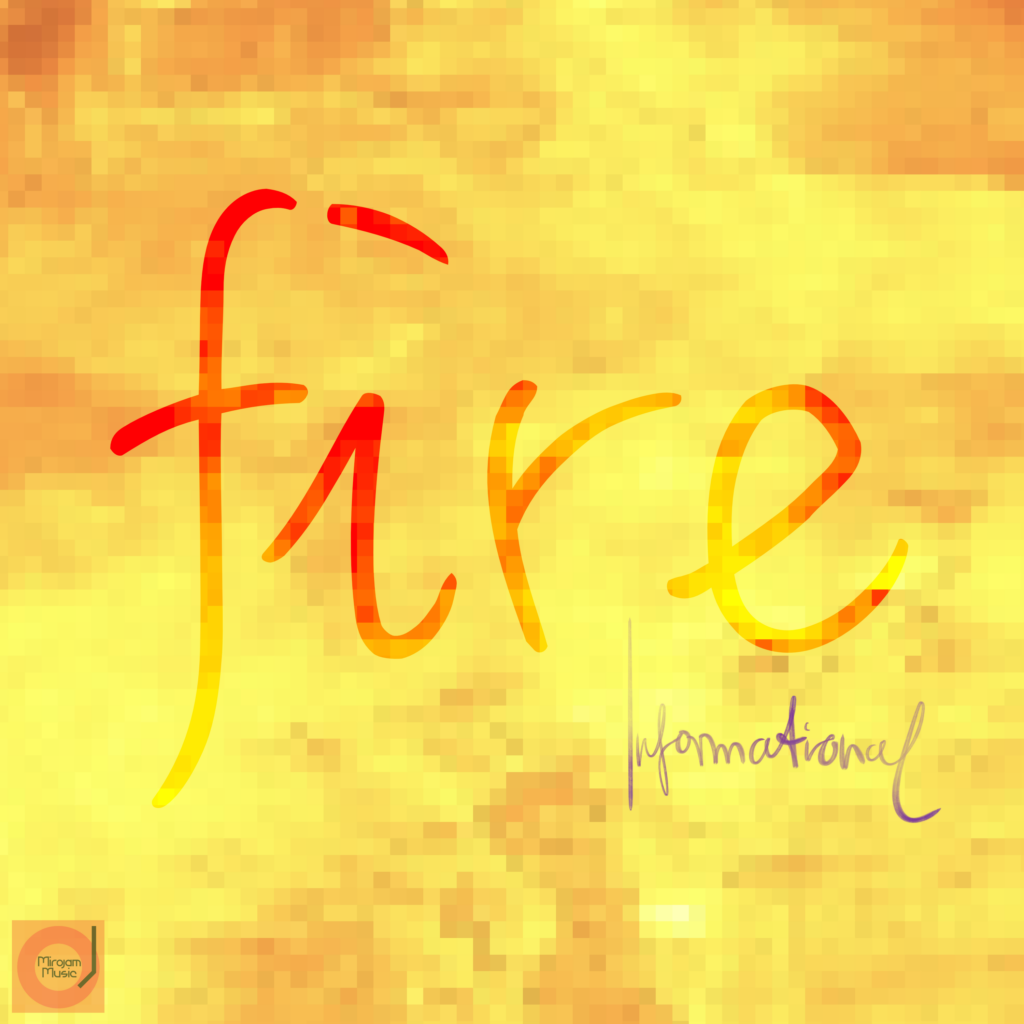
Fire — the third major release from Informational, arriving April 24th, 2026 — doesn’t just continue the project’s trajectory; it consolidates it with intent.
Following the raw, exploratory edges of Damage (2023) and the more structured, introspective scope of life (2025), this new album feels like a deliberate synthesis.
Where the earlier works sometimes leaned in one direction, Fire balances its dual heritage: 80s-inspired electronic textures on one side, and cold, atmospheric electro with trip-hop infusions on the other. The result is a sound that is both nostalgic and forward-facing without slipping into pastiche.
Sonically, the album operates in contrasts. There are moments of restrained minimalism—pulsing basslines, sparse percussion, and distant synth layers—that suddenly give way to dense, almost suffocating arrangements. This tension is not accidental; it mirrors the thematic core of the record. Across its ten tracks, Informational leans heavily into societal and social commentary, but avoids didacticism. Instead, the lyrics unfold like fragments of lived experience—observations shaped by uncertainty, disillusionment, and the persistent search for meaning.
There’s a clear awareness of origin and identity here, paired with a refusal to dilute that identity for broader appeal. That conviction anchors the album, even when the soundscapes drift into more experimental territory.
Emotionally, Fire is deliberately ambivalent. It evokes doubt and fear, particularly in its darker, more stripped-back passages, yet it never settles into nihilism. Threads of hope, self-confidence, and aspiration run throughout, often emerging in subtle melodic shifts or layered vocal textures rather than overt lyrical declarations. This push and pull creates a listening experience that feels dynamic rather than resolved.
The album’s central metaphor—fire as both destruction and creation—is handled with surprising nuance. Some tracks burn slowly, eroding structures and expectations, while others ignite with a sense of urgency and renewal. It’s this duality that gives the record its coherence: Fire is not about choosing between collapse and reinvention, but about recognizing how closely they coexist.
If Damage was about rupture and life about reflection, Fire is about integration. It captures an artist increasingly confident in navigating their own contradictions—musically and thematically. For listeners, it offers not just a collection of tracks, but a cohesive statement: one that acknowledges where it comes from while pushing, deliberately, into what comes next.